Affordable Fire & Safety
Chad Connor | Owner
I hired John about 9 months ago. We now have much better cash flow, we just had our best month ever (both top and bottom line) and we believe that better months are in our future. John's team will provide a business with the resources needed to grow. We meet weekly and it forces me to focus on my business and not just get wrapped up in the day-to-day. Now that we are getting a firm grip on establishing our processes, my stress level has decreased dramatically and I'm starting to enjoy my business again.
BACKGROUND
Affordable Fire & Safety (AFS) was a growing fire protection services company with a complex operation spanning sales, service, construction, scheduling, and estimating. The business had an established client base, with a large share of revenue coming from multi-family work and was at a stage where stronger systems and processes were needed to support efficiency, profitability, and growth.
From a business-value perspective, AFS was at an important stage in its development. The company had enough operational scale, customer activity, and recurring service work to create meaningful enterprise value potential, but it also needed stronger internal reporting, more disciplined forecasting, better scheduling systems, and improved process consistency to make the business more transferable, more scalable, and more attractive from an outside buyer or valuation standpoint. The work with Waters Business Consulting Group (WBCG) helped address many of the foundational areas that often influence how a service business is perceived in a sale or valuation context, including visibility into pipeline activity, workforce planning, role clarity, operational consistency, and management reporting.

Acquired By:

AFFORDABLE FIRE AND SAFETY
www.affordablefireaz.com
CLIENT INDUSTRY:
Fire Alarm and Sprinkler Installation/Maintenance
Ignited Operational Improvements to Extinguish Inefficiencies.
The Challenge:
- AFS lacked clear pipeline visibility and needed better conversion tracking to understand how much work was required in each category to hit production targets.
- Leadership needed better forecasting to support hiring decisions, cash flow planning, overhead management, and equipment purchasing.
- The company was working through the operational and financial challenge of winding down construction while strengthening the service side of the business.
- Ownership wanted to better align technicians’ actual hours with budgeted hours to improve margins and ensure technicians were maximizing their weekly schedules.
- Scheduling practices needed improvement so the team could plan further ahead and better utilize technicians.
- The estimating process for service repairs needed to be refined so labor-hour data could be used more effectively in scheduling and planning.
- Salespeople were manually entering proposal data into PZ, which created inefficiency and limited scalability.
- The Google Sales Log needed improvement so leadership could better track opportunities, monitor closed-but-not-yet-invoiced work, and view sales activity by individual and in consolidated form.
- Leadership was evaluating workflow and field-service tools, including GoCanvas, PZ forms, and Redstripe, and needed to determine the best path forward.
- The organization structure required updates as the business evolved.
- AFS also had some customer concentration in multi-family work, making diversification important to long-term business stability.
- From a sale and valuation perspective, many of these issues reduced transferability and made it harder to demonstrate a predictable, system-driven, scalable business to an outside buyer.
The Solution:
- Improve pipeline visibility and better define conversion ratios across annual service, deficiency, and emergency work categories.
- The consulting team worked with leadership to connect pipeline activity to monthly production goals and improve forecasting discipline.
- WBCG supported workforce planning and transition decisions as AFS wound down construction and strengthened service operations where margins were more favorable than construction margins.
- The team helped refine scheduling strategy so work could be planned more effectively and technician capacity could be better managed and improved gross margin.
- WBCG reviewed and supported updates to the organization structure to better align roles and responsibilities with the company’s current needs.
- The engagement included work on improving the estimating template so service repair estimates could eventually provide better labor-hour inputs for scheduling.
- WBCG helped improve the Google Sales Log by identifying needed changes to rollover logic, salesperson-level visibility, and consolidated sales reporting.
- The team supported efforts to reduce manual proposal entry by exploring an Excel-based import process into PZ.
- WBCG helped AFS assess and coordinate next steps related to GoCanvas, PZ inspection forms, Redstripe, and other field and workflow tools.
- Throughout the engagement, WBCG created more structure, accountability, and operational follow-through through recurring meetings, documented action items, and cross-functional coordination.
- WBCG helped implement KPIs to improve critical metrics that impacted operations and profitability.
- These improvements also supported sale readiness by helping AFS become more organized, transparent, and less dependent on informal processes.
The results:
- AFS developed a clearer framework for understanding how much pipeline volume was needed across different work categories to support production and revenue goals.
- Leadership gained better visibility into how forecasting, scheduling, and sales activity could be used to improve planning and operational control.
- The company made progress in transitioning away from construction while clarifying workforce decisions and strengthening service-side execution with higher margins.
- Sales tracking and reporting became more structured through planned improvements to the Google Sales Log and better visibility into opportunity flow.
- AFS moved toward a more efficient administrative process through efforts to reduce manual proposal-entry work in PZ.
- Leadership gained clearer direction around organization structure, internal accountability, and workflow execution.
- The company advanced evaluation and implementation planning around tools that could improve field reporting, inspections, scheduling, and operational consistency.
- From a business-positioning standpoint, the engagement helped move AFS toward a more system-driven and scalable model, which can improve buyer confidence and strengthen perceived business value.
- Through the implementation of Profit by Design and improved financial reporting, AFS gained clear visibility into profitability, cost structure, and performance drivers which are key components in preparing a business for sale.
- Operational improvements reduced reliance on reactive decision-making and positioned the company as a more system-driven, transferable business.
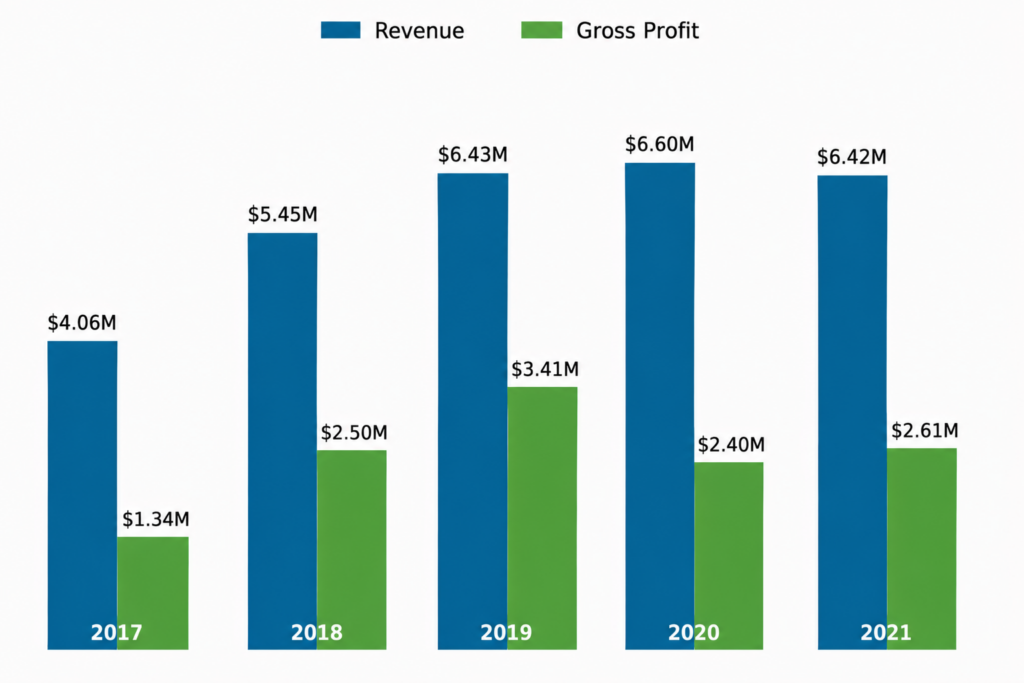
- By 2021, AFS was operating with stronger financial performance, improved margins, and more predictable revenue streams, supported by forward-looking financial models and planning tools.
- As a result of these combined improvements, AFS successfully positioned the business for sale and completed a transaction in late 2021.
- The enhancements to financial visibility, operational structure, and scalability contributed to increased buyer confidence and a more attractive overall valuation profile.