Classic Air Aviation
John Marple | Owner
Lorem ipsum dolor sit amet, consectetuer adipiscing elit. Donec odio. Quisque volutpat mattis eros. Nullam malesuada erat ut turpis. Suspendisse urna nibh viverra non semper suscipit posuere a pede.
BACKGROUND
Classic Air Aviation is a flight training organization that provides pilot certification programs ranging from Private Pilot through advanced instructor ratings. The company operates structured training pathways that guide students from initial enrollment through instrument, commercial, and certified flight instructor (CFI) certifications, ultimately preparing graduates to build the required 1,500 total flight hours necessary to qualify for regional airline employment. At the time of engagement, the organization was focused on improving performance tracking, accountability standards, and operational clarity across students, instructors, and advisors. Leadership sought to better define measurable progress benchmarks for each training stage, including solo milestones, cross-country requirements, checkride readiness, and post-certification pathways. There was also a desire to better align instructor development with long-term airline career pathways and total flight hour accumulation. The owner was also an active airline pilot who was simultaneously operating the flight training business, creating a need for stronger operational structure and internal leadership processes to support day-to-day management of the training operation. Waters Business Consulting Group was engaged to help create structure around performance measurement, clarify training stage progression, and establish objective metrics that would allow leadership to monitor student outcomes, instructor productivity, and overall program effectiveness.

Classic Air Aviation
www.classicairaviation.com
CLIENT INDUSTRY:
Flight Training and Aviation Education

Creating Structure and Accountability for the Next Generation of Pilots
The Challenge:
- Lack of clearly defined measurable accountability standards for students, instructors, and advisors.
- The stage-based payment model required close monitoring of student advancement, creating operational challenges in ensuring consistent progress through the training program
- Inconsistent tracking of student progress through the King Schools CTA program and at-home coursework
- Limited visibility into where students stood in relation to solo, cross-country, and check ride benchmarks
- No standardized performance metrics tied to specific hour targets for key milestones (solo at 25–30 hours, cross-country at 40–50 hours, check ride at 50–60 hours)
- Unclear structure for mapping long-term student pathways from Private Pilot through regional airline qualification
- Lack of a defined tier or progression framework for instructors building hours toward the 1,500-hour airline requirement
- The owner’s airline pilot responsibilities limited his availability to manage daily operations, creating the need for stronger operational leadership and structured management systems.
- Need for alignment between FAA minimum hour requirements and the company’s quoted or actual student averages
- Student progression through certification stages was slower than leadership expected, limiting training throughput and revenue growth.
- COVID-19 disruptions temporarily paused training classes and reduced enrollment activity, further impacting revenue and forcing the business to restructure its operations.
The Solution:
- Implemented structured tracking systems to monitor student advancement through coursework, flight hours, and certification stages
- Defined measurable hour-based benchmarks for solo flight, solo cross-country, and check ride readiness to create clearer training milestones and improve student retention through the certification process.
- Created a structured stage-based progression model outlining the full training pathway: Private Pilot, Instrument, Commercial, CFI, CFII, and MEI
- Clarified hour requirements for each certification level, distinguishing FAA minimums from realistic completion averages
- Developed visibility tools (including spreadsheet tracking) to monitor total time accumulation and stage progression
- Outlined a long-term career pathway framework connecting student training milestones to regional airline qualification at 1,500 total time
- Designed a high-level instructor tier concept based on total time accumulation and monthly billable flight hours
- Provided strategic operational guidance to support leadership structure and improve the management of student progress, instructor productivity, and training throughput
The results:
- Improved clarity around student progression benchmarks and measurable performance standards
- Greater accountability for student advisors in tracking at-home coursework and program compliance
- Clearer visibility into student status relative to solo, cross-country, and check ride readiness milestones
- Defined training pathway from initial enrollment through advanced certifications and airline eligibility
- Better alignment between instructor hour-building goals and the organization’s staffing lifecycle
- Standardized understanding of FAA minimums versus actual average completion hours for each certification stage
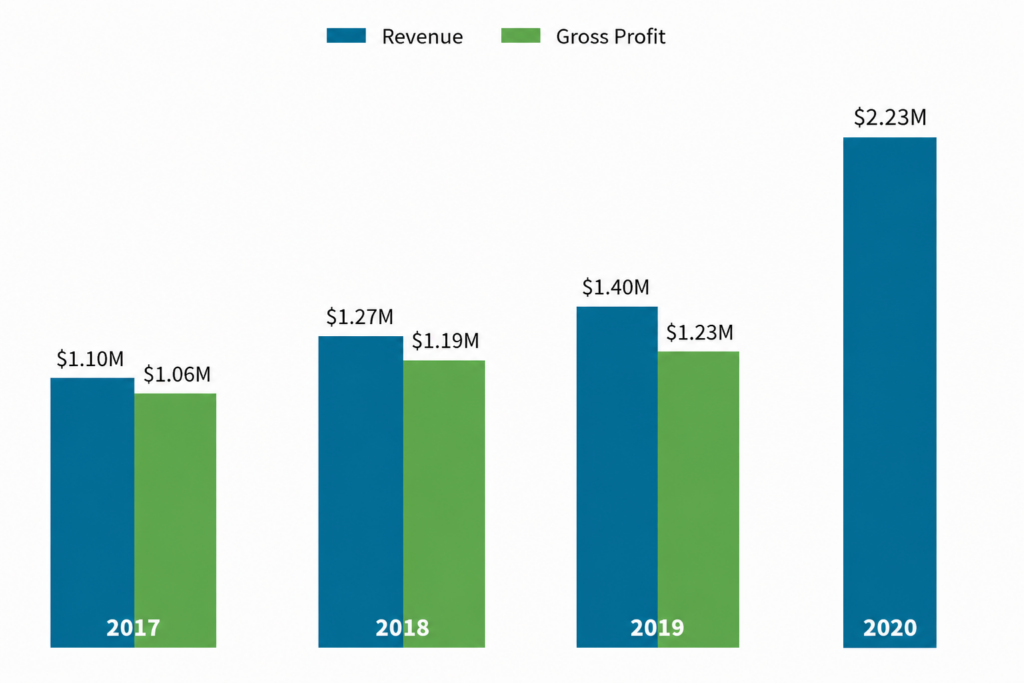
- Developed a financial improvement model projecting annual revenue growth from $1.4 million to $2.5 million through stronger marketing, student conversion, and retention efforts.
- Built a profitability plan projecting EBITDA margin improvement from 8% to 15% through better pricing, budgeting, and operational controls.
- Created a growth roadmap projecting EBITDA growth from $113,208 to approximately $373,588.
- Identified a path to increase business value, with projected asset value growth from $226,417 to $1.68 million.
- Modeled an estimated $1.45 million increase in asset value through revenue growth, stronger margins, and an improved valuation multiple.
- Projected more than $1.07 million in business improvements over 18 months through sales growth, cash flow management, and operational efficiencies.
- Strengthened financial planning by improving cash flow forecasting, margin management, and budgeting processes.
- Positioned the business for growth by aligning marketing, pricing, and student retention strategies with the company's most profitable opportunities.
REVENUE TRENDS: